
Ever feel like you’re doing everything "right" with your website, yet the results just aren't hitting your bank account?
You’ve spent hours on keyword research. You’ve written blogs that would make a novelist jealous. You’re even ranking on page one for a few solid terms. But here’s the kicker, your phone isn't ringing, and your contact form is gathering digital dust.
I’ve seen this exact scenario play out with dozens of service businesses. They focus so hard on the "Search Engine" part of SEO that they completely forget about the "Optimization" part for the actual human being clicking the link.
Here’s the good news, Google has actually made it easier for us to win by rewarding the very thing that makes people buy: a great user experience (UX). If you want to turn your site into a lead-crushing machine, you need to understand that UX isn’t just about "pretty" design, it’s the secret sauce that powers your search rankings and your revenue.
Ready to see how the magic happens? Let’s dive in.
Why Google Suddenly Cares About Your "Vibe"
For years, SEO was a game of cat and mouse. You’d stuff some keywords here, buy a few links there, and hope the algorithm didn't catch on. But those days are long gone. Today, Google’s goal is to provide the best possible answer to a user’s query, and the "best answer" isn't just the one with the right words; it’s the one that’s easiest to consume.
I’ve noticed a massive shift in how search engines evaluate sites. They aren't just looking at what you say, they’re looking at how people behave once they land on your page. Do they stick around? Do they click through to other pages? Or do they hit the "back" button faster than a teenager closing a browser tab when their parents walk in?
This behavior is what we call "user signals," and they are a massive deal for local SEO for service businesses. If Google sees people bouncing off your site, it assumes your content isn't helpful, and your rankings will tank, regardless of how many keywords you’ve crammed into your H1 tags.
The Technical Trio: Core Web Vitals
Imagine walking into a physical store where the door is stuck, the lights are flickering, and the floor is covered in banana peels. You’d leave immediately, right? That’s exactly what a site with poor Core Web Vitals feels like to a potential client.
Google officially integrated Core Web Vitals into its ranking algorithm because it wants to ensure a "delightful" experience. If you’re serious about website conversion optimization, you can't afford to ignore these three metrics:
- Largest Contentful Paint (LCP): This is a fancy way of saying "how fast does the main stuff load?" If it takes longer than 2.5 seconds, you’re losing people.
- Interaction to Next Paint (INP): This measures responsiveness. When someone clicks a button or a menu, how long does it take for the site to actually do something? In my experience, quality sites need to respond in under 200 milliseconds to keep a user’s trust.
- Cumulative Layout Shift (CLS): Have you ever been about to click a link, and the page suddenly jumps, causing you to click an ad instead? That’s a high CLS, and it’s a one-way ticket to Google’s basement.
Speed is the Ultimate Currency
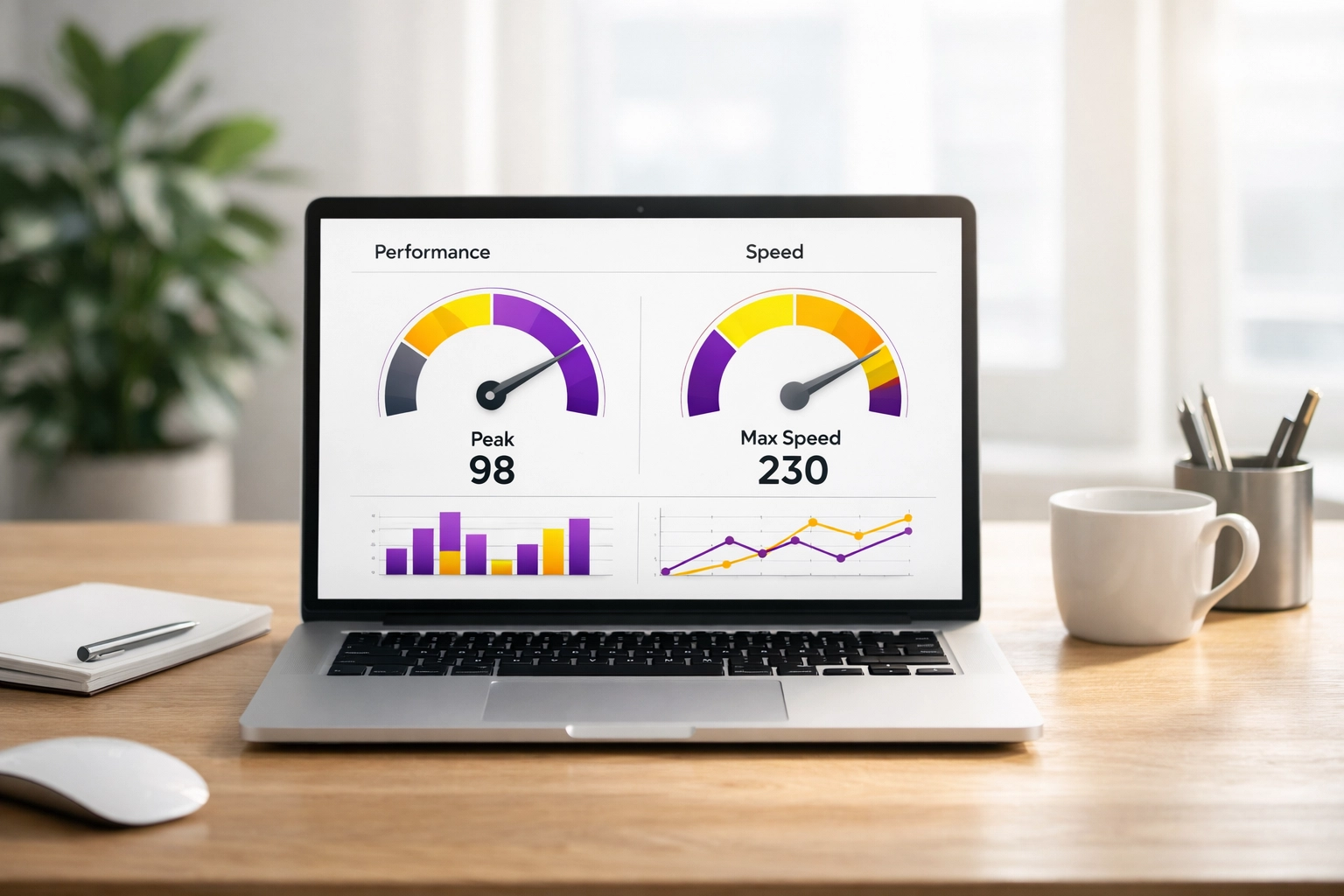
Take it from me, speed is a game-changer. I’ve worked with a local HVAC company that had great content but a site that loaded like it was on a 1996 dial-up connection. We didn't change a single word of their copy; we just optimized their site speed and fixed their image compression.
The result? Their bounce rate dropped by 30%, and their conversion rate nearly doubled in three months.
Why? Because speed builds trust. A fast site says, "We are professional and we value your time." A slow site says, "We’re a bit of a mess." In the world of lead generation, that split-second difference is the gap between a new client and a lost opportunity.
Mobile-First Isn't a Suggestion, It’s the Law
If you’re running a service business, whether you’re a lawyer, a plumber, or a consultant, your clients are looking for you on their phones. They are searching while waiting for coffee, while sitting in traffic, or while sitting on their couch during a commercial break.
Google uses "mobile-first indexing," which means it looks at the mobile version of your site to determine where you should rank. If your site looks like a squashed version of your desktop site, or if the "Call Now" button is too small for a human thumb to press, you’re essentially invisible to a huge chunk of your market.
A conversion focused website design prioritizes the mobile experience. It’s not just about making things smaller; it’s about making things accessible. Think big buttons, readable fonts, and zero intrusive pop-ups that cover the entire screen.
Navigation: Stop Making Your Clients Solve a Puzzle
Here’s the thing, your users are lazy. I don't mean that as an insult; it’s just human nature. We want the path of least resistance.
If a visitor has to click through four different menus just to find your pricing or your service area, they’re gone. Clear navigation helps two groups of people:
- Your Users: They find what they need and move closer to a sale.
- Search Bots: They can easily crawl and index your site, which helps your local SEO for service businesses.
I always tell my clients to follow the "Two-Click Rule." A user should be able to find any vital piece of information, or a way to contact you, within two clicks of landing on any page. If your site structure feels like a labyrinth, it’s time for a redesign.

From Leads to Revenue: The DM Digital Approach
At DM Digital, we don't just care about "getting you to page one." Rankings are a vanity metric if they don't result in money in the bank. This is why we focus on what we call Revenue Operating Systems.
Instead of just looking at SEO as a way to get "hits," we view it as a holistic part of your sales pipeline. We integrate conversion focused website design with high-intent SEO to ensure that the traffic you get is actually qualified and ready to buy.
I’ve seen countless SMBs struggle because they treat SEO and UX as two separate departments. They hire one person to "do the Google stuff" and another to "make the site look nice." That’s a recipe for a disjointed mess. When you align your UX with your SEO strategy, you aren't just ranking, you’re scaling.
Dwell Time and the Power of Authenticity
Google's algorithm is getting smarter at sniffing out "AI-slop" or generic content. It’s looking for "E-E-A-T", Experience, Expertise, Authoritativeness, and Trustworthiness.
How does UX play into this? Through Dwell Time.
If a user spends five minutes reading an article, watching a video, and interacting with an infographic on your site, Google realizes, "Hey, this site is actually valuable."
Don't just post 500 words of fluff. Use original data, share personal stories from your business, and use visual aids. A well-placed infographic or a short video testimonial can keep someone on your page longer, which signals to Google that you’re the authority in your niche. You can see how we’ve helped others achieve this by checking out our customer testimonials.

Friction is the Enemy of Conversion
Every extra field in a contact form, every slow-loading image, and every confusing heading is "friction." And friction is where revenue goes to die.
If you want to master website conversion optimization, you need to obsess over removing friction.
- Is your phone number clickable?
- Do your images have descriptive alt-text (good for SEO and accessibility)?
- Are your calls-to-action (CTAs) clear and compelling?
"Contact Us" is boring. "Get My Free Quote in 60 Seconds" is a compelling offer that reduces the perceived effort for the user.
The Bottom Line: UX is SEO
In 2026, you can't separate the two. A site with "perfect" SEO but "garbage" UX will eventually lose its rankings because people will stop engaging with it. Conversely, a site with "perfect" UX but no SEO will be a beautiful secret that nobody ever finds.
You need both.
Start by running a speed test. Check your site on your own phone. Ask a friend to try and book a service on your site while you watch (it’s a humbling experience, trust me).
If you're ready to stop guessing and start building a website that actually drives growth, we're here to help. Whether it's through Ads, Social Media, or a complete Revenue Operating System overhaul, DM Digital focuses on the metrics that actually matter: your ROI.
Ready to transform your digital presence? Let's get to work.

Meta Title: Why UX is the Secret Sauce for Your SEO Strategy | DM Digital
Meta Description: Discover how user experience (UX) and Core Web Vitals directly impact your SEO rankings and lead generation. Learn to optimize your service business website for revenue.
Focus Keyphrase: conversion focused website design