
I've seen it happen too many times.
A local HVAC company invests in Facebook ads and gets a flood of leads, then the pipeline dries up the second they pause spending. A law firm ranks #1 on Google Maps but can't figure out why prospects still aren't calling. A consulting practice posts religiously on LinkedIn but can't convert visibility into actual revenue.
Here's the thing, relying on a single marketing channel is like building a house on one leg. It works until it doesn't. And when that channel shifts (algorithm changes, ad costs spike, competitors outbid you), your entire revenue stream collapses.
The good news? There's a better way.
I've helped dozens of service businesses build what I call the 3-Channel System, a strategic framework that combines paid social, local SEO dominance, and consistent messaging to create a predictable revenue pipeline. Not just more leads. More qualified opportunities that actually convert into paying clients.
Let's dive in.
Why Most Service Businesses Struggle with Growth Marketing
Before we get into the system, let me address the elephant in the room.
Most service businesses approach marketing like they're throwing spaghetti at the wall. They hear Facebook ads are working for someone, so they dump money there. They read that video content is exploding, so they start posting reels. They get told SEO matters, so they hire someone to "fix their website."
The result? A scattered, inconsistent approach that generates sporadic results at best.
Here's what I've learned working with professional services firms, home service companies, and local B2B providers, you don't need to be everywhere. You need to dominate three specific channels that work together to move prospects from discovery to decision.
Research shows that multi-channel customers spend two to five times more than single-channel customers. But here's the kicker, it's not about being on every platform. It's about choosing the right three and executing them flawlessly.
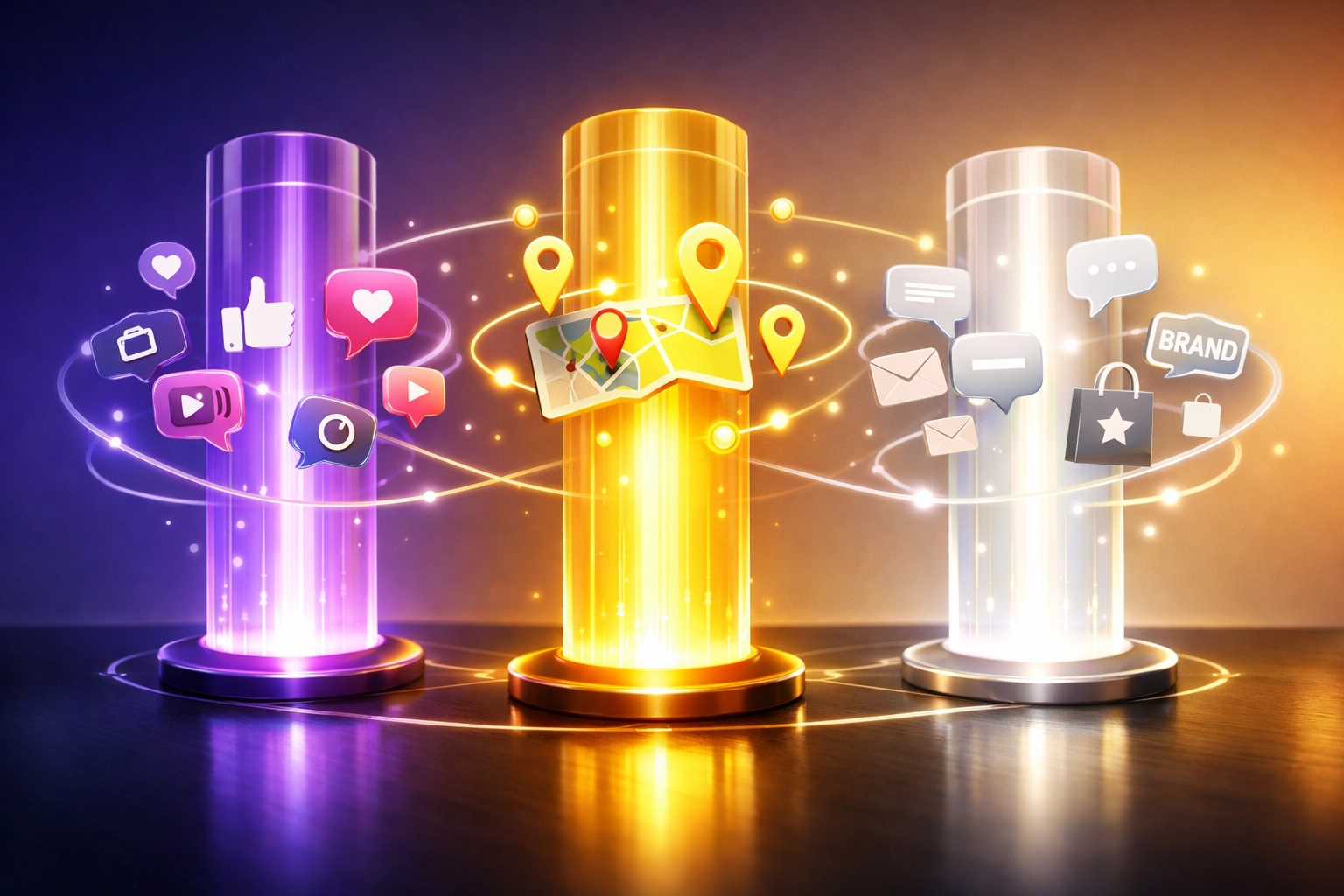
Channel 1: Paid Social Media, Your Fast-Track to Brand Awareness and Initial Pipeline
Let's start with the channel that generates results fastest, paid social advertising, specifically Facebook and Instagram ads.
I know what you're thinking. "Aren't Facebook ads expensive?" "Don't people just scroll past them?"
In my experience, paid social serves two critical functions for service businesses:
First, it builds frequency. Your potential customers need to see your brand multiple times before they trust you enough to pick up the phone. Paid social puts your message in front of targeted local audiences repeatedly, creating the familiarity that drives conversions.
Second, it generates quick wins. Unlike SEO strategies that take months to build momentum, a well-crafted ad campaign can start generating qualified inquiries within days.
Here's how a local accounting firm I worked with approached this: They targeted business owners within a 15-mile radius who fit specific demographic criteria. The ads highlighted their specialized industry expertise and offered a free tax planning consultation. Within 30 days, they generated 47 qualified leads and converted 8 into clients worth $35,000 in annual recurring revenue.
The key? They didn't treat paid social as a one-and-done tactic. They maintained consistent ad spend ($1,500-$2,000 monthly) to keep their brand visible while the other channels built momentum.
Pro tip, Don't just optimize for leads. Optimize for revenue. Track which ad campaigns generate clients that actually close, not just form fills that waste your sales team's time.
Channel 2: Google Maps SEO, Your Highest-ROI Lead Generation Engine
Now let's talk about the channel that produces the highest return on investment for service businesses: Google Maps optimization.
This is where things get interesting.
Unlike paid ads that require continuous spending, Google Maps SEO generates free, high-intent leads once you achieve strong local rankings. Think about it: when someone searches "emergency plumber near me" or "business attorney in Chicago," they're not browsing. They're ready to hire.
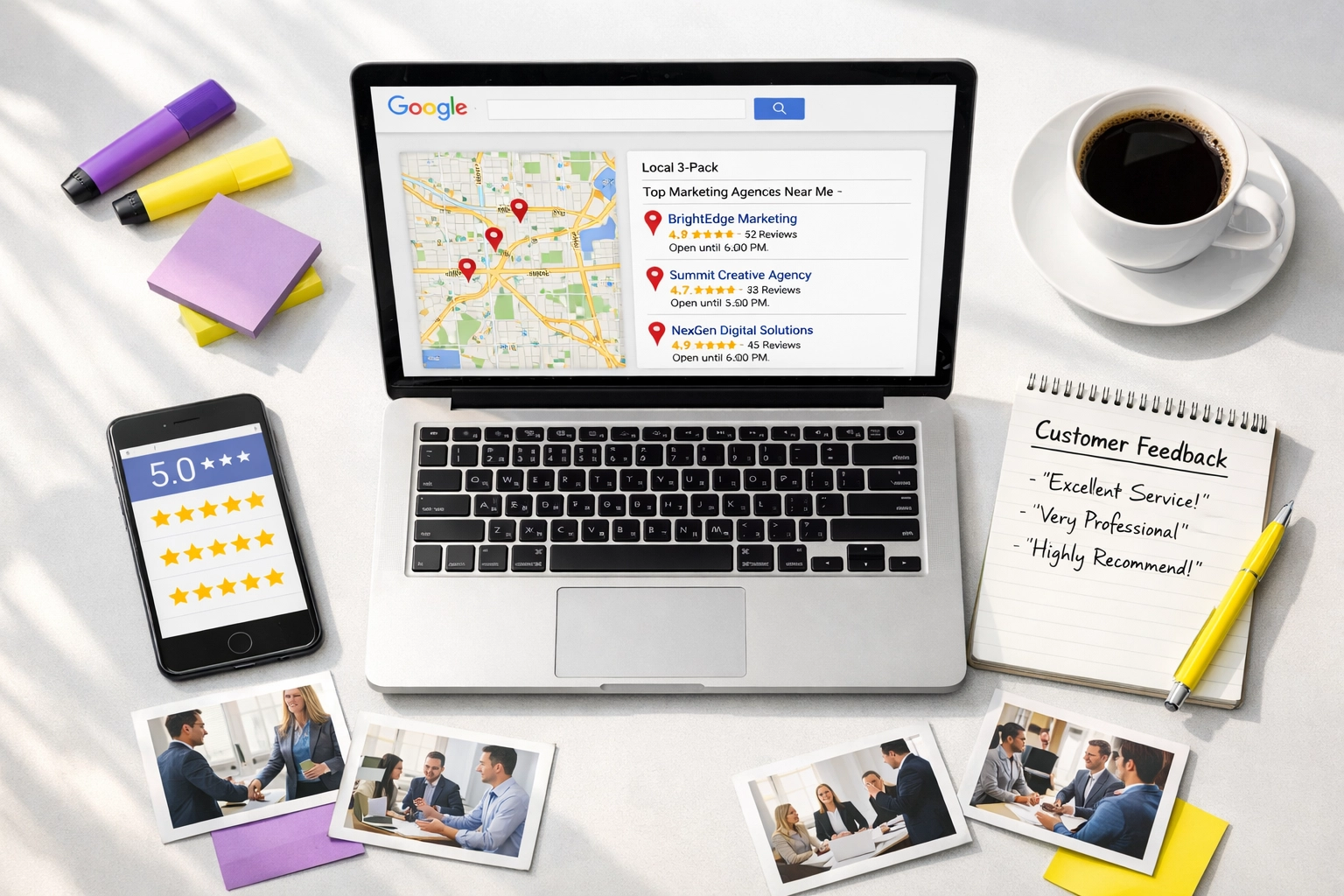
I've seen service businesses completely transform their revenue by dominating the Google Maps 3-pack (those top three local results that appear with the map). A pest control company I consulted for went from getting 3-4 calls per week to 15-20 after we optimized their Google Business Profile and review generation system.
Here's what actually moves the needle:
Consistent review acquisition. You need fresh, authentic reviews flowing in regularly. Not 50 reviews all from the same month three years ago. I'm talking about a systematic process that generates 5-10+ reviews monthly.
Profile optimization that goes beyond the basics. High-quality photos, regular posts, accurate service area definitions, complete business information, and strategic keyword integration in your business description.
Active engagement with customer questions and reviews. Google rewards businesses that respond quickly and thoughtfully. It signals that you're an active, legitimate business worthy of top rankings.
The beautiful part? Once you establish strong local SEO rankings, they're sustainable. Unlike paid ads that stop working the second you pause spending, your Google Maps presence keeps generating revenue month after month.
Channel 3: Consistent Messaging Across Every Touchpoint
Here's where most service businesses drop the ball: and it's costing them serious revenue.
Your third channel isn't actually a platform. It's a strategic approach to how you show up everywhere.
Think about your customer journey for a second. Someone sees your Facebook ad on Tuesday morning. They Google your company name that afternoon and check your reviews. They visit your website on Wednesday. They drive past your physical location on Thursday. They see another ad on Friday.
If each of those touchpoints tells a different story: different messaging, different offers, inconsistent branding: you've just killed any momentum you built.
I worked with a home remodeling company that was running beautiful Instagram ads showcasing their high-end kitchen transformations. But when prospects clicked through to their website, they landed on a generic homepage talking about "full-service remodeling solutions" with stock photos. The disconnect was costing them conversions.
We unified their messaging across every channel: the same brand promise, the same visual identity, the same customer-focused language whether someone encountered them through ads, organic search, their Google Maps listing, or their website.
The result? Their consultation booking rate increased 34% without changing their ad spend.
Here's what consistent messaging means in practice:
Your value proposition is crystal clear everywhere. Whether someone finds you through an ad, a Google search, or a referral, they should immediately understand what makes you different and why they should choose you.
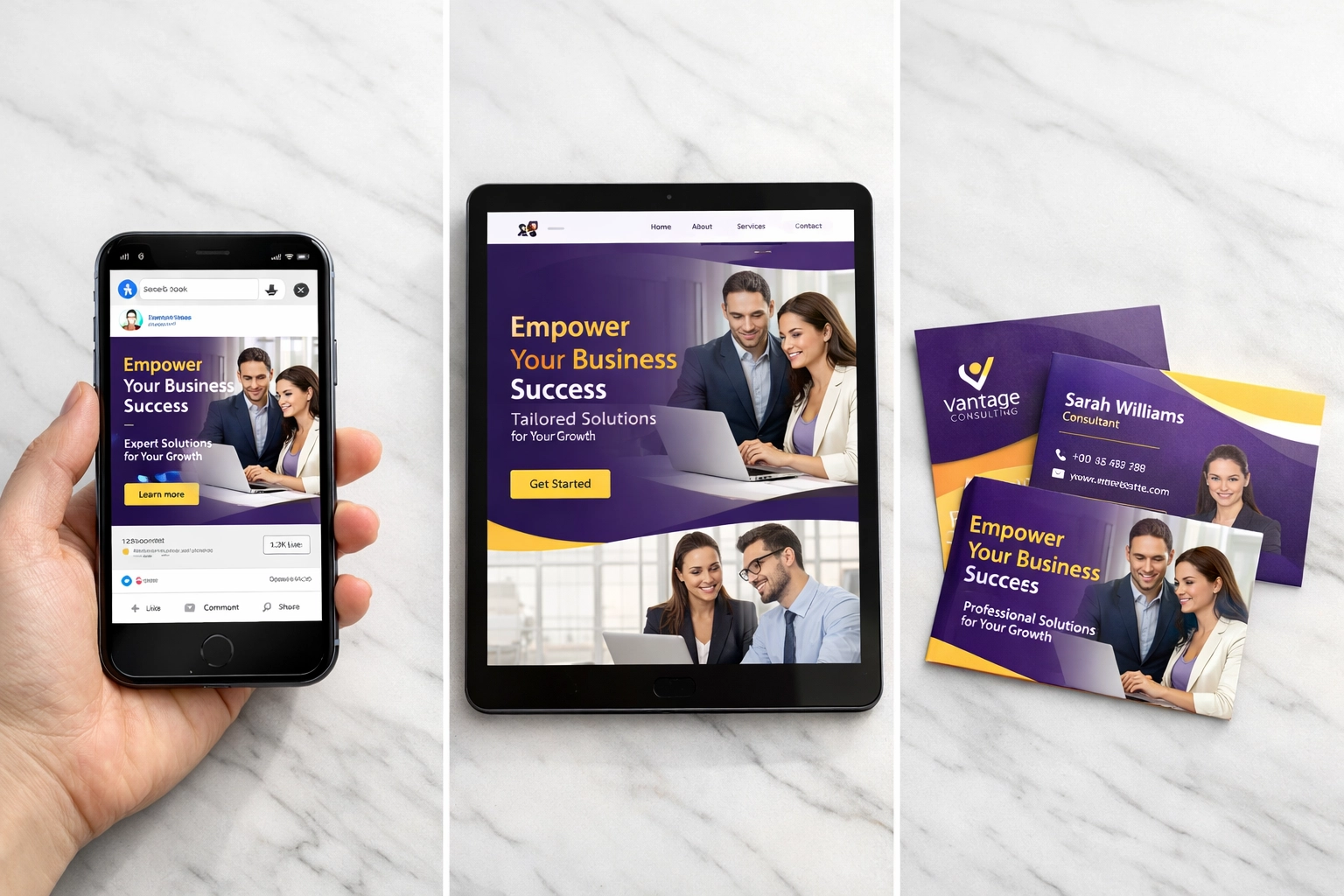
Your visual branding is cohesive. Same colors, same fonts, same style of imagery across your website, social profiles, ads, and printed materials.
Your offers align across platforms. Don't promote a "free consultation" on Facebook while your Google Business Profile talks about a "complimentary assessment." Use the same language.
Building Your Predictable Pipeline: How the Three Channels Work Together
Here's where the magic happens: when all three channels work in concert to move prospects through your pipeline.
Let me walk you through how this plays out in real time:
Week 1-2: Sarah sees your Facebook ad three times while scrolling. She doesn't click, but your brand registers in her mind. She's now aware you exist.
Week 3: Sarah's furnace breaks. She Googles "heating repair near me" and sees your business in the Google Maps 3-pack with 127 five-star reviews. She clicks through to your Google Business Profile and sees consistent messaging that matches what she vaguely remembers from those ads.
Week 4: Sarah visits your website. The messaging aligns perfectly with what she saw on Google Maps. The photos in your portfolio match the style from your ads. She books a consultation because everything feels cohesive, professional, and trustworthy.
Week 5: You close a $4,500 HVAC replacement job.
That's the 3-Channel System in action.
You're not hoping for random discovery. You're building a systematic approach where paid social creates awareness, Google Maps captures high-intent searches, and consistent messaging converts consideration into revenue.
The businesses I've seen dominate their markets don't rely on luck or one-off viral moments. They execute this framework consistently month after month, letting compound growth do the heavy lifting.
Getting Started: Your 90-Day Implementation Plan
Ready to build your own predictable pipeline?
Here's how to roll out the 3-Channel System without overwhelming your team:
Month 1: Audit and Align. Review your current messaging across all platforms. Document every disconnect. Create a unified brand message, value proposition, and visual identity that will guide everything moving forward.
Month 2: Optimize Your Google Maps Presence. Claim and fully optimize your Google Business Profile. Implement a systematic review generation process. Start posting weekly updates. Take professional photos of your work, team, and location.
Month 3: Launch Strategic Paid Social. Start with a modest budget ($1,000-$1,500) testing different ad creative that aligns with your unified messaging. Target your specific local audience. Track not just leads, but conversions to revenue.
Then iterate, optimize, and scale what's working.
The key is treating this as a system, not a collection of random tactics. When someone discovers you through an ad, encounters you again through Google Maps, and then visits your website: they should feel like they're continuing a conversation with a trusted expert, not jumping between different businesses.
The Bottom Line on Predictable Growth
Look, I'm not going to tell you this is easy. Building a truly predictable revenue pipeline takes strategic thinking, consistent execution, and patience to let the flywheel gain momentum.
But here's what I know from working with hundreds of service businesses: the ones who commit to this 3-Channel System stop worrying about where their next client is coming from. They stop panicking when ad costs spike or algorithm changes tank their organic reach.
They build real, sustainable growth that compounds month after month.
If you're ready to move beyond feast-or-famine revenue and build a marketing system that actually works together, the 3-Channel System is your blueprint. Start with one channel this month, add the second next month, and unify your messaging throughout.
Your future clients are out there searching right now. The question is whether they'll find a scattered collection of marketing attempts or a cohesive, compelling brand that guides them straight into your pipeline.
Time to build something that lasts.