
Here's the uncomfortable truth: your Google Maps ranking isn't saving you anymore.
I've watched service businesses obsess over getting that coveted #1 spot in the local pack: pouring time and budget into reviews, citations, and keyword-stuffed GMB descriptions: only to see their lead quality tank and revenue stagnate. Why? Because in 2026, AI systems like ChatGPT, Perplexity, and Google's own Gemini are making the choice for your customers before they ever see that three-pack.
The good news? Local SEO for service businesses isn't dead. It's just evolved past the point where traditional ranking tactics alone will drive revenue growth. If you're still chasing rankings instead of building a scalable sales pipeline across the entire digital ecosystem, you're leaving serious money on the table.
Let me show you what's actually working: and how to build a revenue growth system that turns AI-driven discovery into measurable marketing ROI.
The Shift Nobody Saw Coming (But Everyone's Feeling)
Google doesn't rank individual web pages for local results anymore. They rank business entities: the sum total of your digital presence, trust signals, and ecosystem recognition. Two HVAC companies with nearly identical websites can rank wildly differently based on one factor: how legitimate, trusted, and relevant Google's AI perceives them to be across the entire web.
That means your competitor with the worse website but stronger entity recognition? They're winning. And here's the kicker: traditional local SEO metrics won't tell you why.
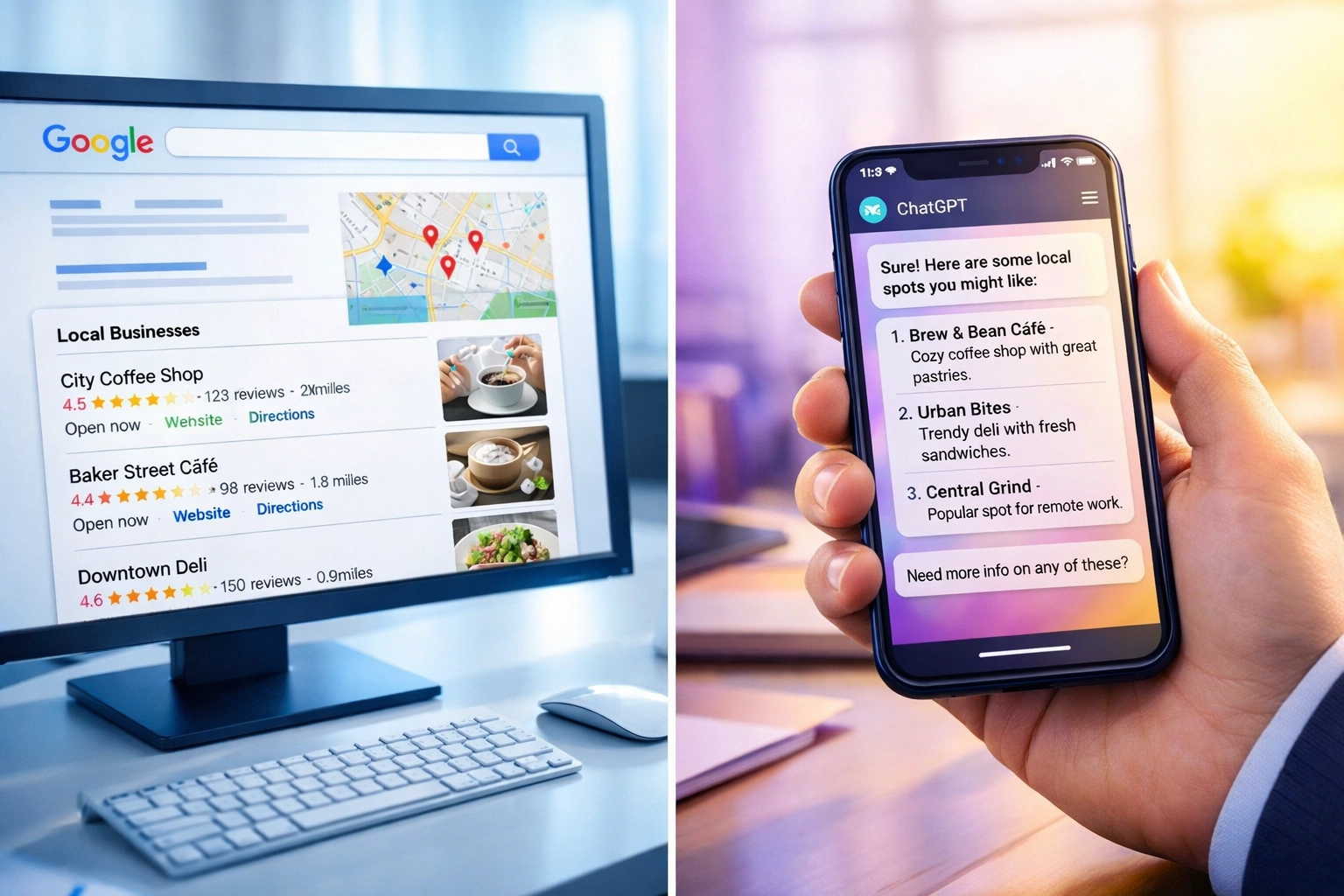
According to recent data, businesses that recover from traffic losses show brand search increases first, then ranking improvements follow. The implication is massive: your rankings are now a lagging indicator of brand distribution, not the cause of growth. If you're not building recognition across AI platforms, review ecosystems, social proof channels, and community discussions, you're invisible where it actually counts.
This isn't about gaming the algorithm. It's about understanding that AI search optimization means being the obvious, trusted answer when someone asks ChatGPT, "Who's the best plumber near me?" instead of Googling it.
Why This Is a Revenue Problem, Not Just a Traffic Problem
I've seen this play out dozens of times: a local service business invests heavily in SEO, climbs to position #2 in Maps, sees their traffic double: and their revenue stays flat. Why? Because showing up isn't enough. You need to show up in a way that drives qualified pipeline, not just clicks.
Here's what actually determines your marketing ROI in 2026:
Entity trust determines conversion velocity. When AI systems recommend your business across multiple platforms (Google, Apple Maps, ChatGPT, Perplexity), prospects arrive pre-sold. They've already seen your name validated by multiple sources. That cuts your sales cycle and increases close rates: which means faster revenue recognition and lower customer acquisition costs.
Behavioral engagement predicts pipeline quality. Businesses with high click-through rates from Maps, consistent direction requests, and repeat brand searches generate higher-intent leads. Google's AI learns that you satisfy search intent, which creates a compounding effect: better rankings drive more qualified traffic, which reinforces rankings, which attracts even better leads. That's a scalable sales pipeline, not a traffic bump.
Ecosystem presence compounds ROI over time. A single optimized GMB profile generates linear returns. A distributed presence across Google, Apple Maps, AI citation platforms, social proof channels, and industry directories generates exponential returns: because each signal validates the others, and trust accumulates faster than you can build it on one platform alone.
Take it from me: the businesses crushing it right now aren't faster optimizers. They're clearer entities with distributed authority: and they're converting that visibility into consistent, predictable revenue growth.
What Actually Determines Local Visibility Now (The AI-First Framework)
Let's get tactical. If rankings are a lagging indicator, what are the leading indicators you should be tracking? These are the signals that drive both AI recommendations and Google's entity recognition:
1. Entity Recognition & Multi-Platform Trust
Google's AI assesses whether your business is real, relevant, and validated across the digital ecosystem. This includes:
- Review velocity (consistent new reviews matter more than total count)
- Owner response rate (signals active management and customer care)
- Authentic visual proof (real job photos, not stock images)
- Cross-platform consistency (same NAP data, hours, services everywhere)
Here's the thing: inactive profiles decay in rankings even if they were once perfectly optimized. The AI interprets inactivity as irrelevance. That means consistent engagement and fresh signals are non-negotiable for maintaining visibility.
2. Behavioral Engagement Signals
User actions directly influence your ranking stability and AI recommendation likelihood:
- Clicks from Maps listings
- Calls initiated from your profile
- Direction requests
- Website engagement after discovery
- Repeat branded searches
When users consistently choose you over competitors, AI systems learn that you satisfy intent: and ranking improvements typically follow demand increases, not precede them. This is why revenue growth systems that prioritize customer experience and service quality outperform pure SEO tactics over time.
3. AI Visibility Score (Your New Authority Metric)
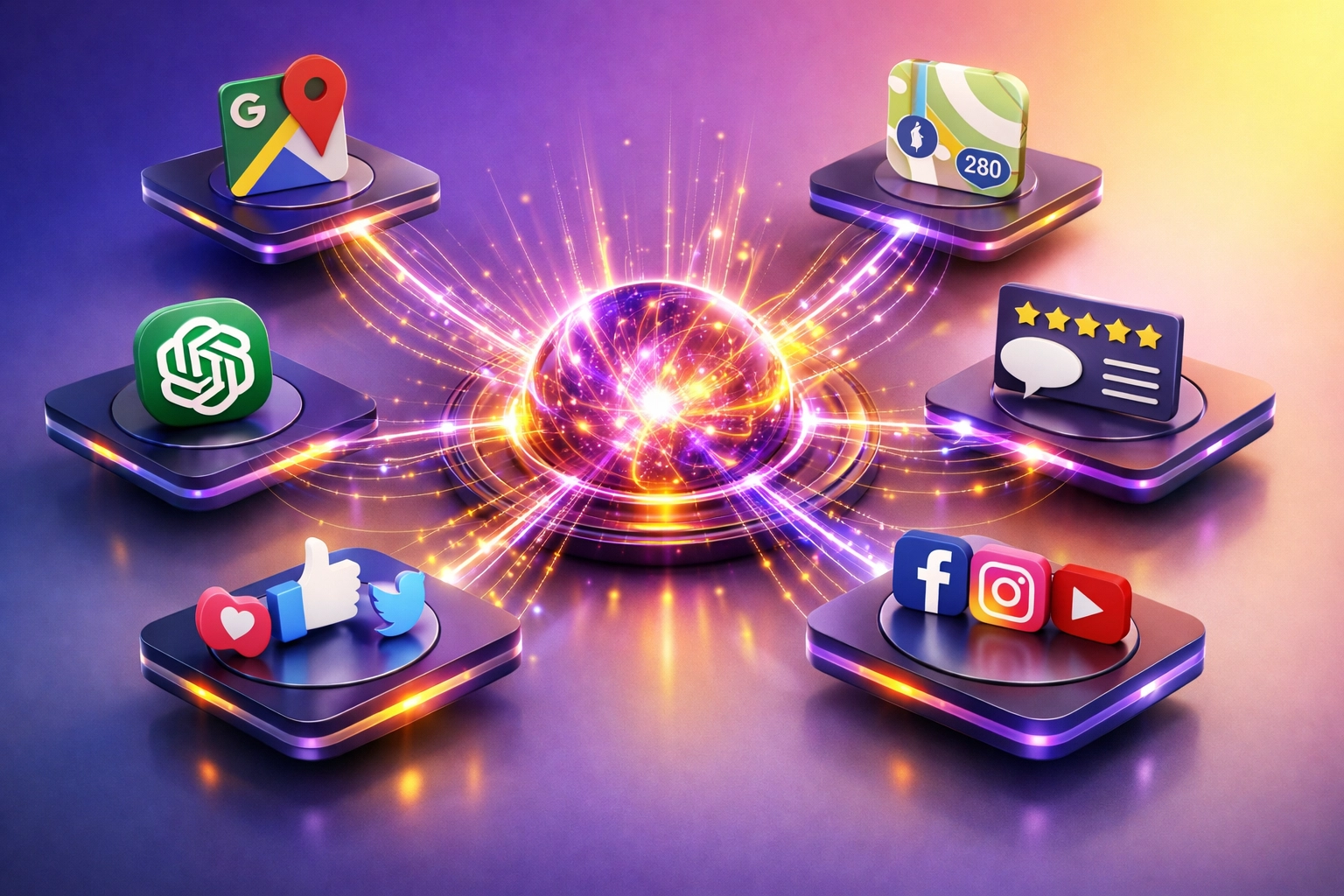
Traditional SEO focused on Google alone. AI search optimization requires visibility across the full recommendation ecosystem:
- How often does ChatGPT cite you in "best local [service]" queries?
- Does Perplexity recommend you in voice search results?
- Are you showing up in Apple Maps and Bing ecosystem traffic?
- Do AI-powered directories and discovery platforms recognize your entity?
Your AI Visibility Score: the frequency with which AI platforms reference and recommend your business: is now as important as your Google Maps ranking. Businesses with high AI visibility report significantly better lead quality and conversion rates because prospects arrive already validated by multiple AI sources.
How to Show Up When AI Makes the Choice (Your 5-Step Action Plan)
Ready to build a revenue growth system that actually works in 2026? Here's the framework I use with service businesses to shift from rankings-chasing to revenue-building:
Step 1: Build Brand Recognition Beyond Your Website
Brand search is a ranking multiplier. Start by:
- Getting active in local community discussions (Reddit, Nextdoor, Facebook groups)
- Answering industry questions on forums and Q&A platforms
- Publishing case studies and client success stories across multiple channels
- Creating helpful content that gets shared and referenced
Pro tip: Visibility in forums, social platforms, and community discussions directly influences whether AI systems recommend you. You're training the AI to recognize you as an authority.

Step 2: Create Location-Specific, High-Quality Content
Generic "We serve [city name]" pages are killing your trust score with AI systems. Instead:
- Build dedicated pages for each service-location combination
- Include real, specific details about that particular area (landmarks, neighborhoods, local context)
- Add authentic photos and testimonials from actual jobs in that location
- Focus on coverage completeness, not volume
A local electrician I worked with replaced 20 templated city pages with 5 deeply detailed location pages and saw their qualified lead volume increase by 40% in three months. Why? Because AI systems rewarded entity clarity over keyword stuffing.
Step 3: Maintain Active Profile Signals Across All Platforms
This is where most service businesses fail: they optimize once and ghost. Don't do that. Commit to:
- Responding to every review within 24-48 hours
- Uploading fresh project photos monthly
- Posting Google updates or offers quarterly
- Keeping hours, services, and contact info current everywhere
Review recency often matters more than review count. High engagement with photos boosts visibility. And consistent behavioral signals like calls and direction requests verify to AI systems that you're actively operating.
Step 4: Integrate Your Digital Presence Across the Full Ecosystem
Don't put all your eggs in the Google basket. Optimize for:
- Google Business Profile (obviously)
- Apple Business Connect
- Bing Places
- AI-powered directories that feed ChatGPT and Perplexity
- Industry-specific platforms
Embed Google Maps on your website to reinforce location relevance. Monitor performance across multiple platforms. Track which channels drive the highest-quality leads and double down on those.
Step 5: Build the Technical Foundation for AI Crawlability
Clean website architecture, mobile performance, proper schema markup, and crawlable HTML remain table stakes. But once those foundations are solid, growth depends on authority, trust, and demonstrated demand: not technical tweaks.
Make sure your site is:
- Mobile-optimized with fast load times
- Using LocalBusiness schema markup correctly
- Structured with clear service and location page hierarchies
- Accessible to AI crawlers (robots.txt, XML sitemaps, clean code)
This gives AI systems the technical confidence to recommend you. Then your entity signals and ecosystem presence do the heavy lifting.
From Visibility to Revenue: Building the Full Growth System
Here's what I want you to understand: showing up in AI recommendations is just the first step. The businesses winning in 2026 have built complete revenue growth systems that turn visibility into qualified pipeline and pipeline into closed revenue.
That means:
- Tracking not just rankings but conversion rates, lead quality scores, and customer lifetime value
- Building feedback loops between marketing visibility and sales outcomes
- Using marketing ROI data to double down on what's working and cut what's not
- Creating a scalable sales pipeline that grows predictably, not sporadically
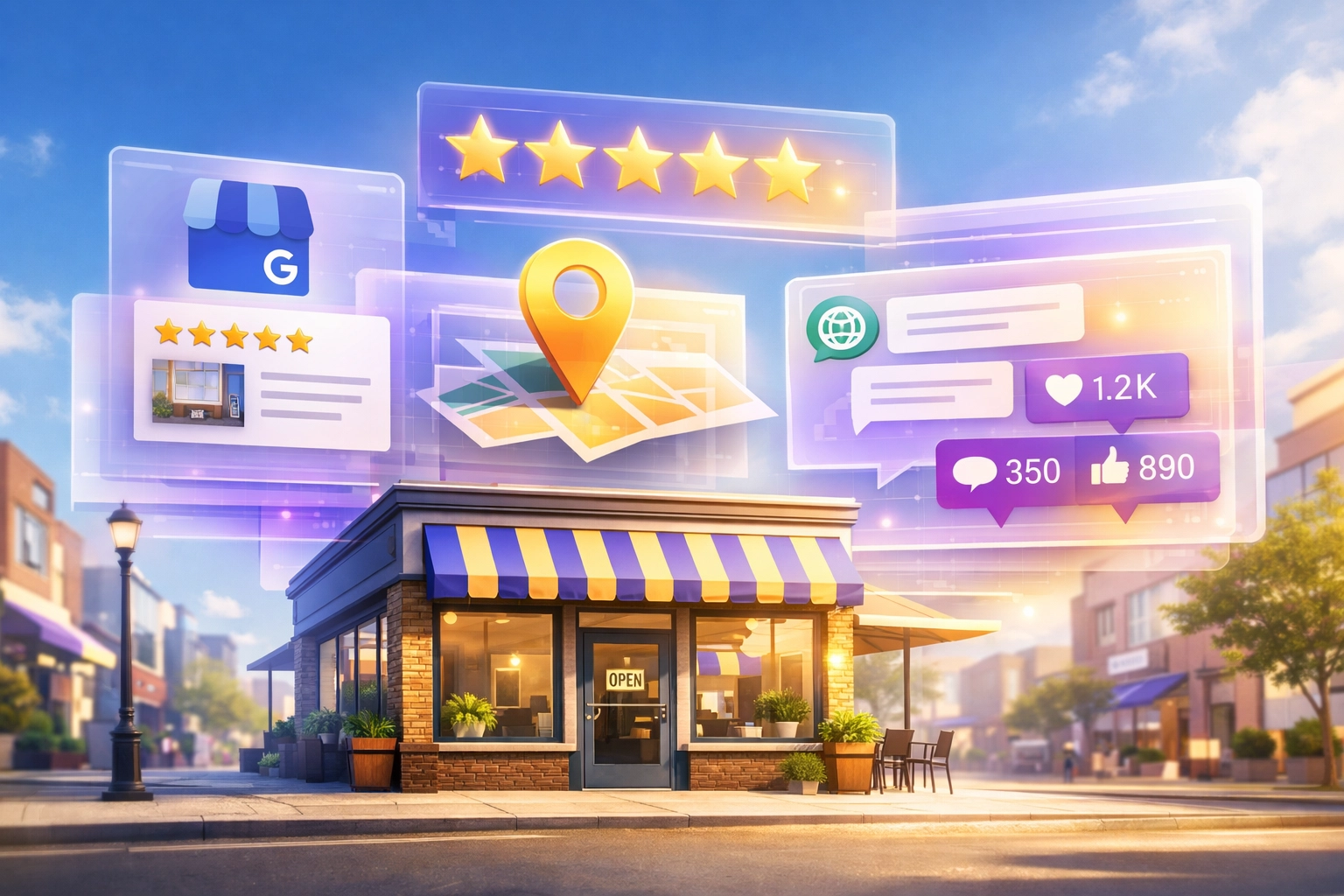
I've seen service businesses increase revenue by 2-3x without moving their Google Maps ranking a single position: simply by optimizing for the right signals and building systems that convert visibility into dollars. That's the difference between chasing rankings and building growth.
If you're still thinking about local SEO as a ranking game, you're playing yesterday's strategy in tomorrow's market. The winners in AI-driven search aren't the fastest optimizers: they're the clearest entities with distributed authority and measurable revenue impact.
Want to see where your business stands? Start by auditing your AI Visibility Score across ChatGPT, Perplexity, and other AI platforms. Then build out your entity recognition signals. And finally, connect those visibility metrics back to your actual revenue outcomes.
Because in 2026, local SEO for service businesses isn't about showing up first. It's about showing up right: in the places where AI makes the choice, with the trust signals that drive conversions, and with the growth systems that turn visibility into sustainable revenue.
Now get out there and build something that compounds.