
I've seen countless businesses chasing the wrong metric. They're obsessed with clicks, traffic, and rankings: but here's the thing: your website traffic is about to become irrelevant.
By the end of 2026, AI assistants will handle 25% of all search queries. Google's AI Overviews already appear on 13.1% of searches (up from 6.49% in January 2025), and that number is exploding. The game isn't about getting clicks anymore. It's about building revenue growth systems that work without clicks.
Ready to rethink your entire approach to search? Let's dive in.
Why Clicks Are Dying (And What's Replacing Them)
Here's a stat that should wake you up: click-through rates dropped 15.5% on queries that trigger AI Overviews. Even worse? Only 1% of users actually click the links inside those AI summaries.
Think about it. When someone asks ChatGPT or Google's AI a question, they get a complete answer right there on the screen. No need to visit your site. No need to click through to your carefully crafted landing page.
I've worked with service businesses that saw their organic traffic drop 20–30% in six months: not because their content got worse, but because AI started answering their prospects' questions for them.

So if traffic is dying, how do you generate revenue?
The answer: you stop optimizing for clicks and start optimizing for citations, visibility, and trust.
The New Revenue Model: Citations Over Clicks
Here's what successful businesses are doing in 2026.
Instead of obsessing over traffic numbers, they're focused on being cited as the authoritative source when AI delivers answers. When Perplexity, ChatGPT, or Google's AI Overview mentions your brand as the go-to expert, you're building trust at scale: even if no one clicks.
Take it from me: a single mention in a ChatGPT response to "What's the best marketing agency for mid-sized SaaS companies?" can drive more qualified pipeline than 1,000 cold clicks from generic search terms.
Why? Because those AI-driven recommendations come with implicit endorsement. The searcher already trusts the answer before they even reach out.
How to Get Cited (Not Just Clicked)
Getting into AI answers isn't magic. It's structure.
First, your content needs to be scannable for AI systems. That means clean formatting, clear headers, bulleted lists, and structured data. AI assistants are pulling from well-organized, hierarchical content that answers questions directly.
A local HVAC company I worked with restructured their service pages into question-based headers ("How much does a new furnace cost in St. Louis?") and saw a 40% increase in qualified calls: even as their traffic stayed flat. They weren't getting more visitors. They were getting better visitors who found them through AI citations.
Second, you need to think in conversational queries. Users aren't typing "CRM software" anymore. They're asking, "What's the best CRM for a 50-person marketing agency with Salesforce integration that costs under $150 per user monthly?"
Your content should mirror that natural language. Write headers as questions. Use FAQ sections. Answer the exact question your prospect is asking, not some keyword-stuffed variation.

Third, build authority through multi-angle content. AI systems favor sources that cover a topic from every angle. If you've only got one blog post about "lead generation," you're invisible. But if you've got 10 pieces covering lead generation strategy, tools, ROI measurement, pipeline management, and conversion optimization: you're suddenly a trusted resource.
And here's the kicker: personalization is the new ROI lever. Companies with consistent, multi-angle content are seeing 20–30% increases in digital revenue because AI systems recommend them based on user context. You're not just ranking for a keyword: you're being recommended based on behavioral patterns and intent signals.
Visual Search Is Your Competitive Edge
While everyone's freaking out about text-based AI, there's a goldmine most businesses are ignoring: visual search.
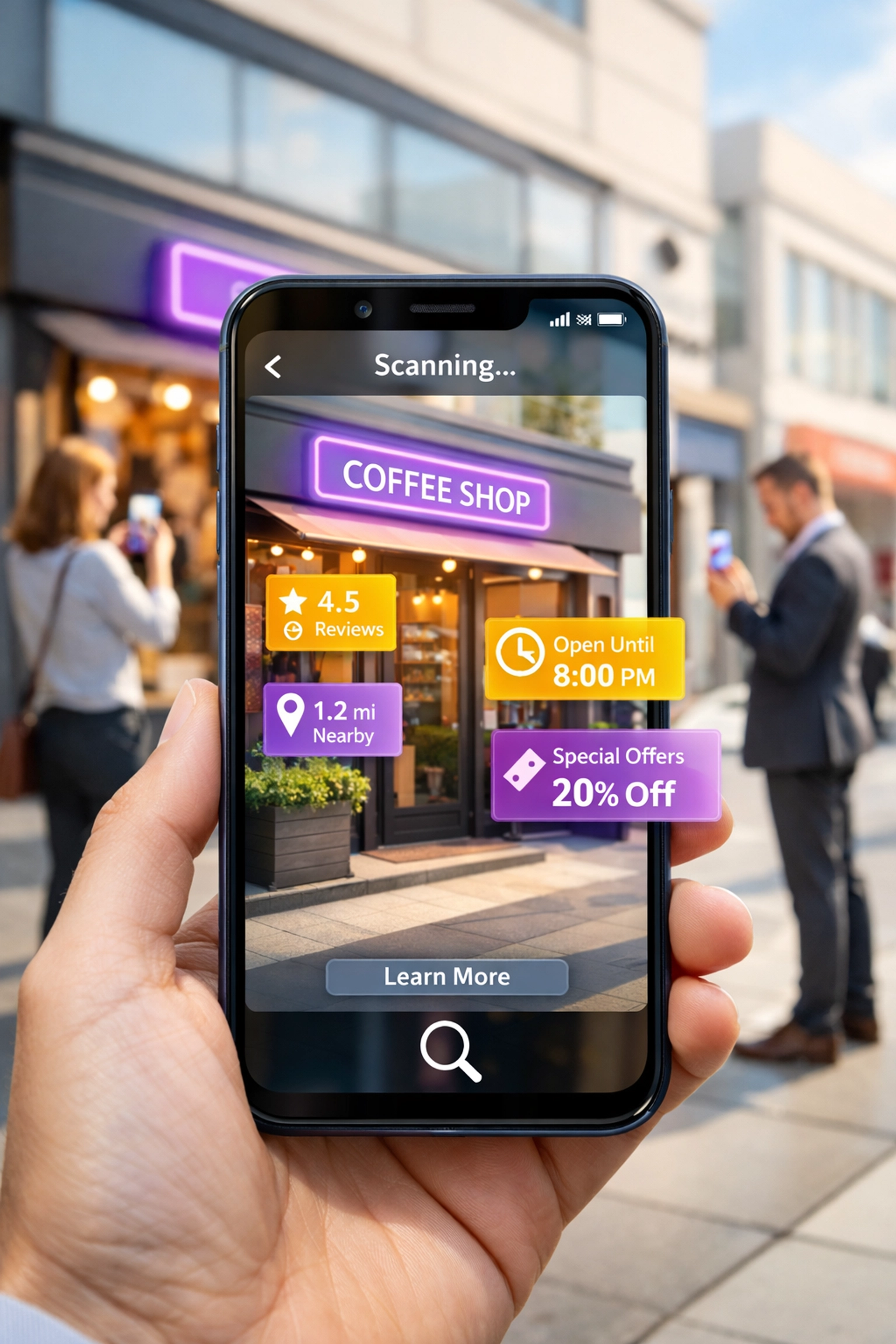
Google Lens processes over 12 billion visual searches every month. People are snapping photos of products, logos, and even billboards to find what they need.
I've seen local restaurants double their foot traffic by optimizing their storefront photos and menu images for visual search. A regional plumber got a 50% increase in service calls after adding high-quality images of completed jobs with descriptive alt text.
Here's the thing: AI hasn't cracked video yet. It can't convincingly replicate the authenticity and relatability of a human speaking to a camera. That means video content is your unfair advantage in 2026.
If you're not creating short-form video content that answers customer questions, you're leaving money on the table. Period.
The Gen Z Factor: Where Your Future Customers Are Searching
If you're still optimizing exclusively for Google, you're missing an entire generation.
58% of U.S. adults under 30 have used ChatGPT. 31% of Gen Zers start their searches on AI platforms like Perplexity, Gemini, or ChatGPT Search: compared to just 20% of the general population.
Your future customers aren't Googling anymore. They're asking AI assistants.
That means you need visibility across conversational AI environments, not just traditional search engines. The businesses that win in 2026 are the ones showing up in ChatGPT answers, Perplexity citations, and Gemini recommendations.
Building Revenue Growth Systems That Don't Depend on Clicks
So how do you actually build a revenue growth system in this new landscape?
Step 1: Audit Your Content for AI Optimization (AEO)
By 2026, AI optimization is as critical as SEO ever was. Run through your existing content and ask:
- Is it structured with clear headers and bullets?
- Does it answer specific, conversational questions?
- Is it formatted for easy scanning by AI systems?
- Do you have schema markup and structured data?
If not, start there. Our SEO services are built around this exact framework: optimizing for visibility and authority in AI-driven search.
Step 2: Create a Multi-Angle Content Engine
One blog post won't cut it. You need a content ecosystem that covers your core topics from every angle.
Think about your buyer's journey. What questions do they ask at each stage? Create content that answers those questions in different formats: blog posts, videos, infographics, case studies, FAQs.
The businesses crushing it right now have content engines that consistently publish valuable, structured content. (We wrote a whole post about why your business needs a content engine in 2025: it's even more relevant now.)
Step 3: Track Revenue, Not Traffic
Here's where most businesses get it wrong. They're still measuring success by clicks and impressions.
In 2026, your metrics should be:
- Pipeline velocity: How fast are leads moving through your funnel?
- Sales-qualified pipeline value: What's the total value of qualified opportunities?
- Conversion to revenue: What percentage of AI-driven citations turn into paying customers?
- Customer acquisition cost (CAC): How much are you spending to acquire each customer through AI channels?
If you're not tracking marketing ROI in your digital efforts, you're flying blind.
Step 4: Build for Humans First, AI Second
This is the most important rule: optimize for human readability first, AI synthesis second.
AI systems reward content that genuinely helps people. Write for your customer, not for the algorithm. Answer their questions clearly. Provide real value. Build trust through authenticity.
When you nail that, the AI citations follow naturally.
The Bottom Line
The shift from clicks to citations isn't coming: it's already here.
Businesses that adapt are seeing 20–30% revenue increases and 50% better marketing spend optimization. Those that don't? They're watching their traffic evaporate while wondering why their phones stopped ringing.
You don't need to become an AI expert overnight. Start small:
- Restructure your best-performing content with clear headers and conversational questions
- Create one piece of video content this week answering your customers' most common question
- Track one revenue metric (like pipeline velocity) alongside your traffic numbers
In my experience, the businesses that win are the ones that act now: not the ones waiting for the "perfect" strategy.
Want to build a revenue growth system that works in 2026 and beyond? Let's talk. We're helping service businesses transform their search presence into predictable revenue engines: no clicks required.